01
0–2 s
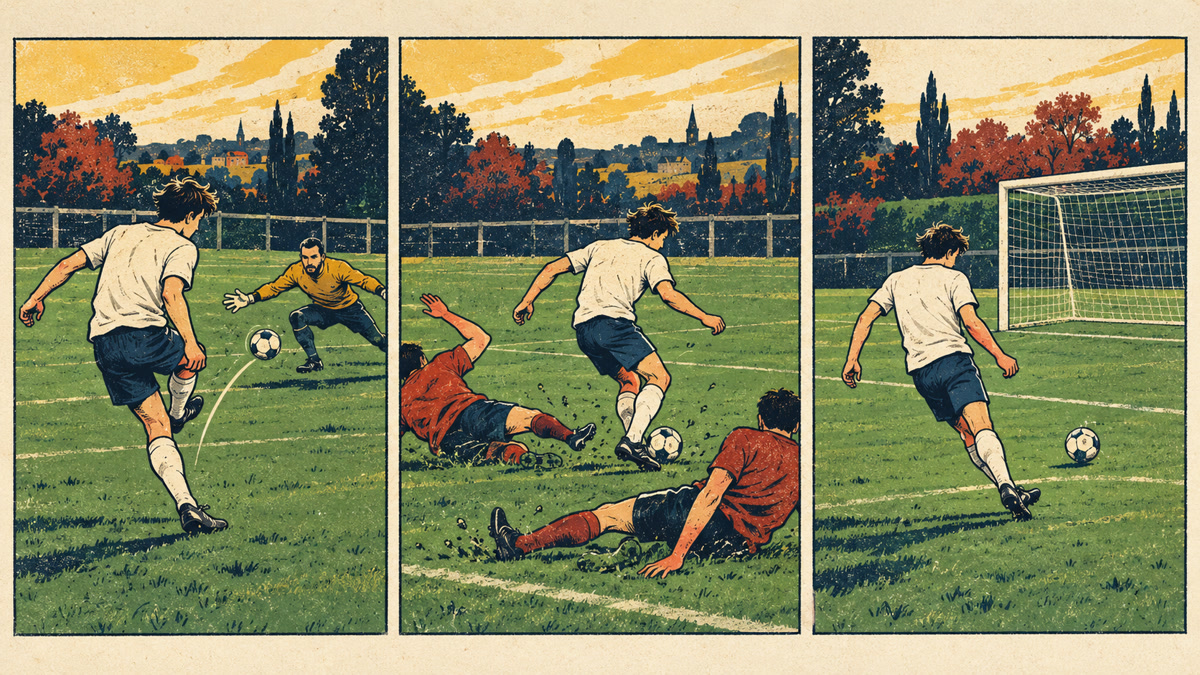
The keeper closes the angle
OZIL AI GOAL TREND
The trend reimagines a recognizable five-part football sequence with a different fictional scorer. This guide explains the format, the one-photo creation workflow and the checks that matter before you share an AI-generated result.
The historical reference is Mesut Özil's late winner for Arsenal away at Ludogorets on 1 November 2016. UEFA records the 3–2 result and Özil's late goal. The appeal of later AI-style edits comes from the sequence: the goalkeeper commits, the scorer stays composed, defenders rush back, and the finish is delayed until the route is clear.
An AI interpretation is not authentic match footage. It should be described as newly created media, should not imply an official relationship with the player, clubs, UEFA, or a broadcaster, and should use only people and source material for which the creator has permission.
Public reporting in October 2026 documented many fictional characters appearing in versions of the goal. That reporting helps establish that the format was circulating, but it does not establish who created the first version, who owns each edit, or whether a public post can be reused in a commercial product. This page therefore describes observable format and timing instead of embedding those posts or repeating their footage.
The timing below is a content map for evaluating a fictional recreation. It is not a guarantee that a video model will deliver every action or preserve a person's identity.
A short clip may show only the first challenge. A complete fifteen-second interpretation needs enough time for the scorer to recover the ball, react to the defenders, and complete the final action without hiding continuity problems behind a cut.
The keeper closes the angle
The ball is lifted over the challenge
The scorer regains control
Recovering defenders slide past
A calm finish completes the sequence
A prepared edit may place a face over existing footage. Its source, duration, permissions, and current availability must be checked separately.
A model creates a new football scene from text and an image. The stadium, keeper, defenders, and timing may change on every attempt.
A reference video supplies motion and camera timing while an authorized image supplies the new fictional scorer. The reference video rights remain a separate requirement.
One authorized adult photo supplies the fictional scorer. A fixed server-owned reference supplies the action and camera timing. The result is delivered privately for playback, MP4 download or deletion.
Current public posts and reports do not provide enough reliable evidence to name one definitive creator. Reposts, regional feeds, deleted posts, and changing view counts make a precise first-post claim difficult to verify, so this page does not invent one.
The historical goal is real, but an AI recreation is newly generated or edited media. Some creation routes reuse underlying footage, while others generate a fictional stadium scene. A responsible post should disclose which route was used.
Public visibility does not grant permission to download, modify, upload to an AI Provider, or sell a derivative. The creator, depicted people, footage owner, music owner, clubs, logos, and broadcaster may each have separate rights.
Yes. The accepted workflow uses one authorized adult photo and a fixed reference sequence to create a private 15-second vertical video. Results can contain AI artifacts and should be reviewed before sharing.